
How we test air purifiers
AirLab reviews exist so a shopper can decide after one careful read. This page is the full test standard. Product reviews only summarize the key gates and results. The detail lives here so every unit is judged the same way.
Every review uses this method for its particle, noise, and power numbers. If a page uses illustrative data while a lab run is still pending, that page is labeled as sample data.
- Test room
- 9m²
- Fan on at
- 75µg/m³
- Clean at
- 15µg/m³
- Sound meter
- 1m
Equipment
Every unit is tested with the same four tools. None of them are lab-grade, which is the point: the setup is cheap enough that the results reflect a real home, and consistent enough that reviews can be compared.
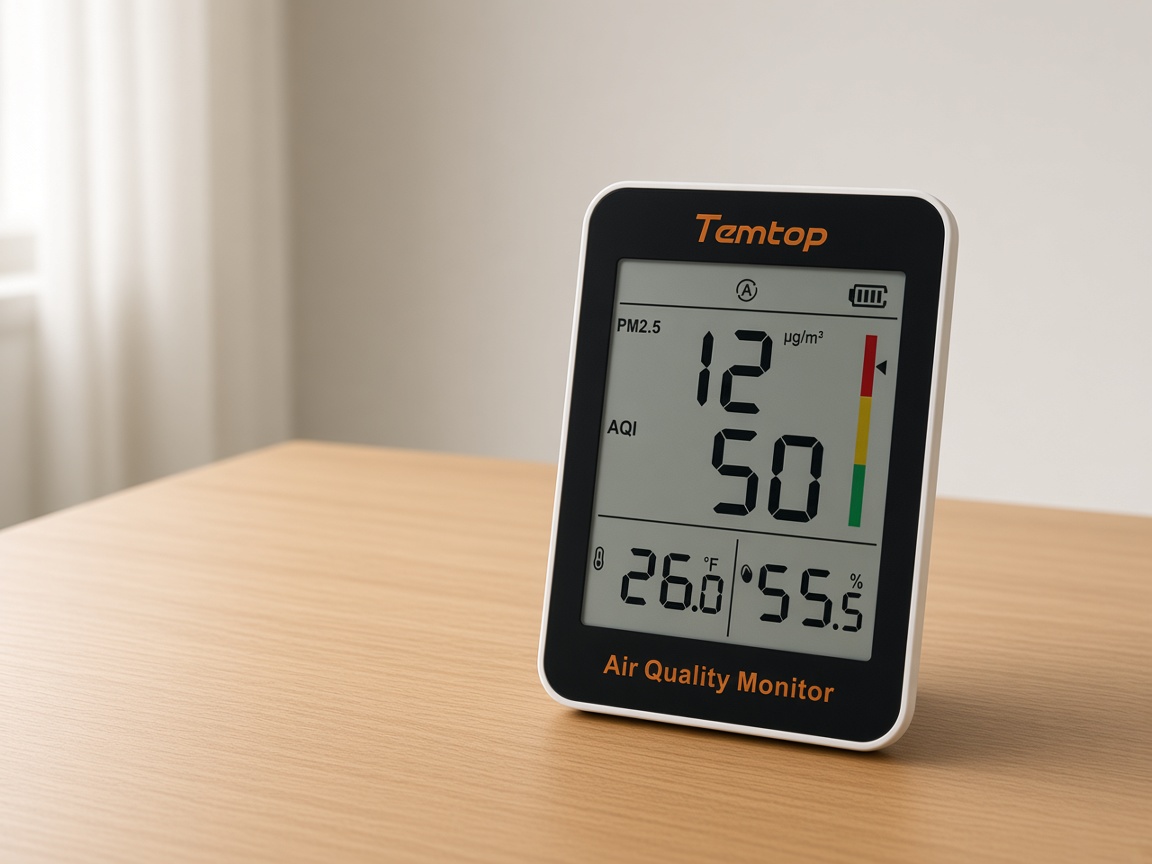
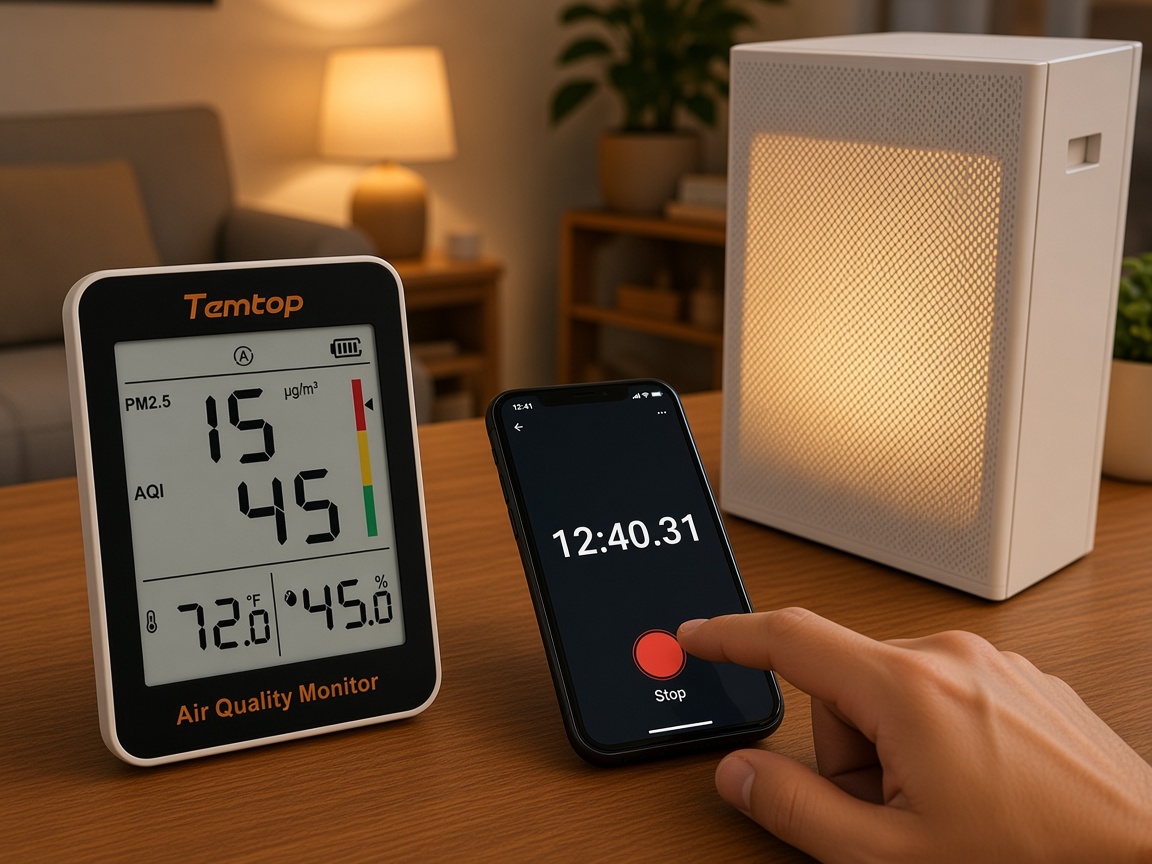
Temtop S1 air quality monitorLogs PM2.5, AQI, temperature, and humidity. Every start and clean gate is read from this screen. 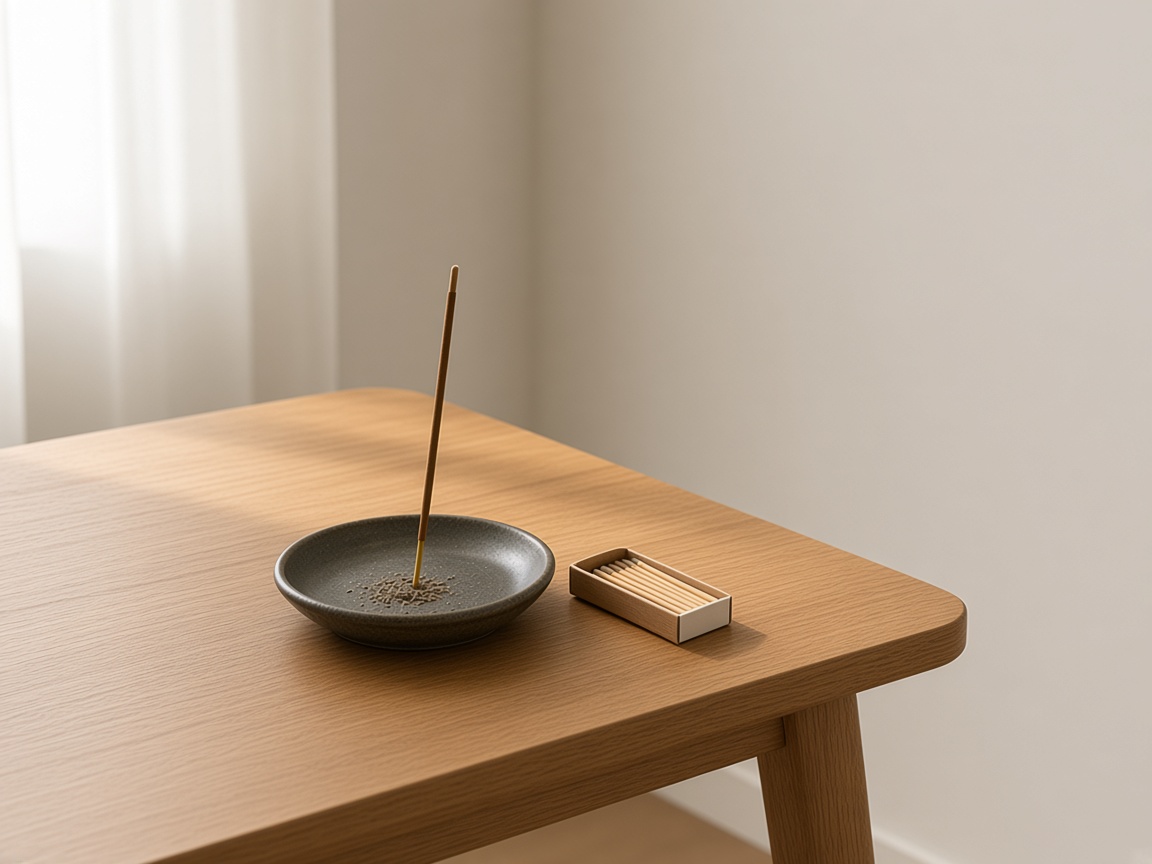
Incense sticksIncense is the particle challenge. It fills the room with fine smoke in a repeatable way. 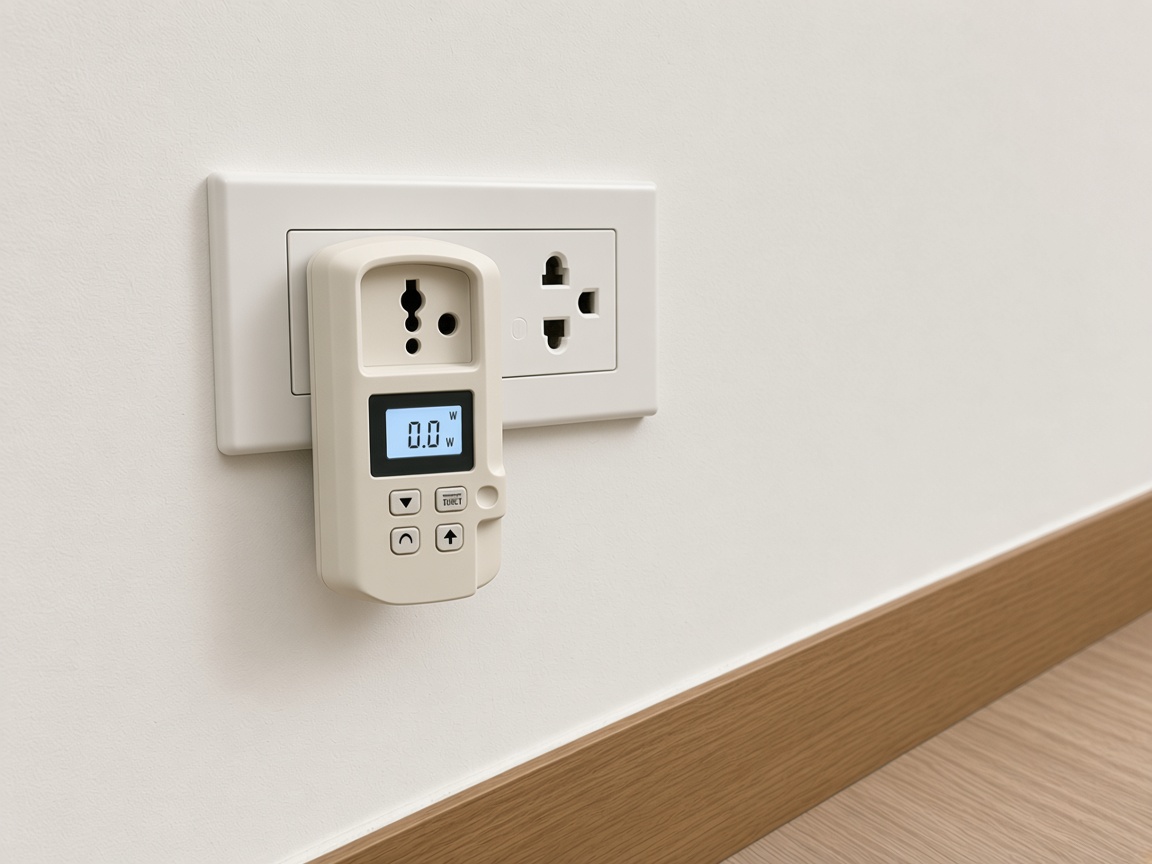
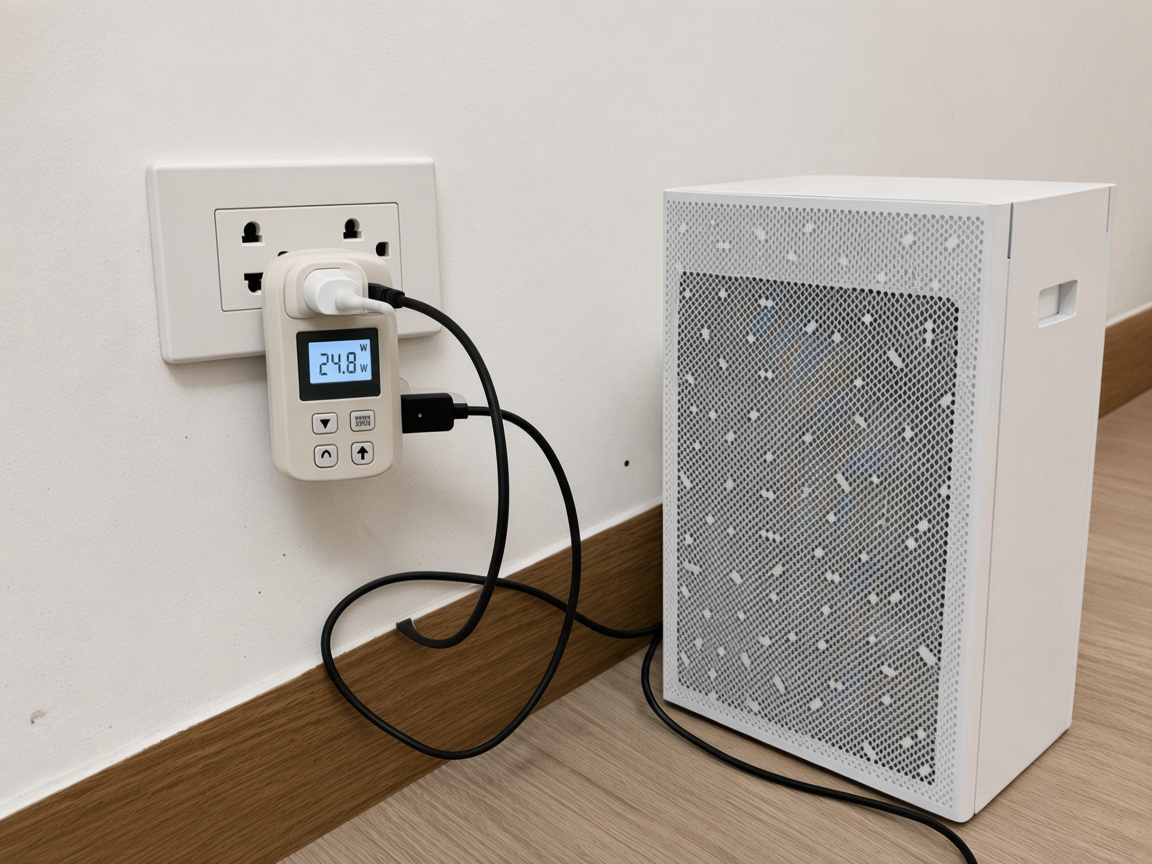
Plug-in energy meterSits between the wall socket and the purifier to read watts at each fan speed. 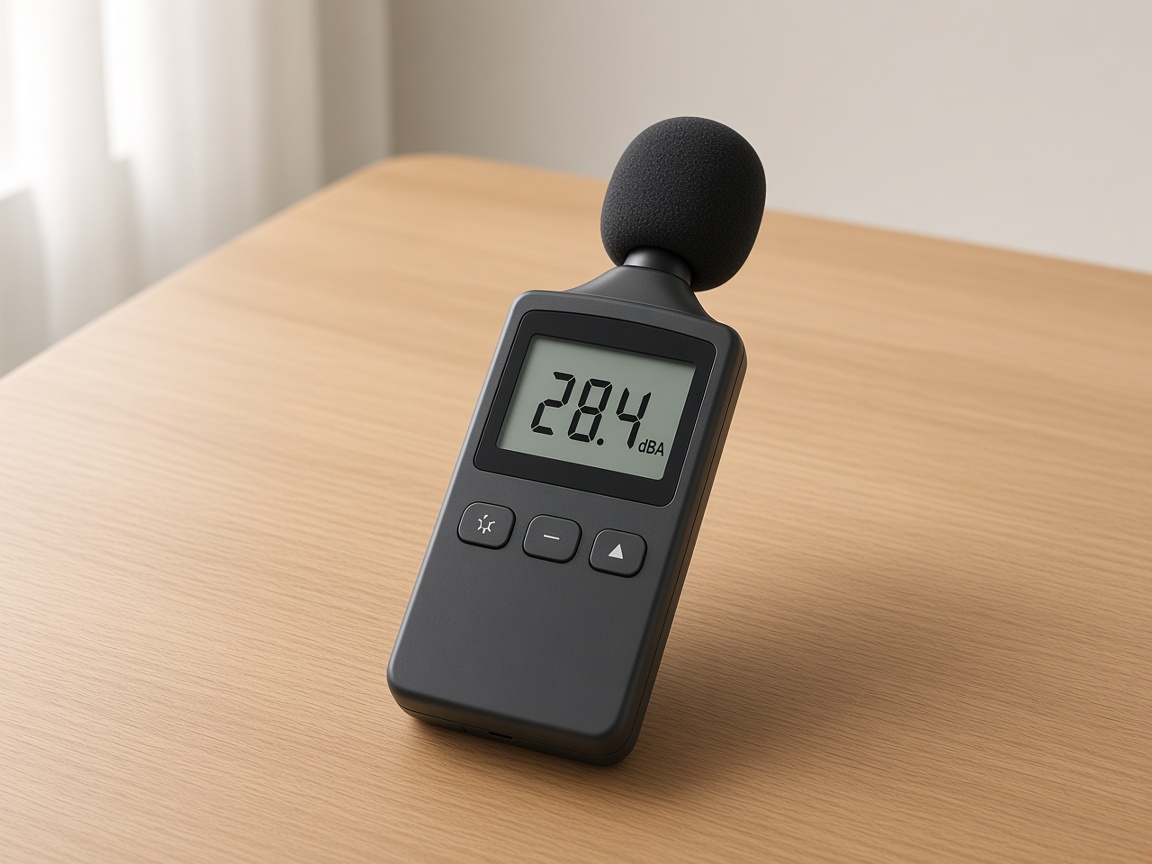
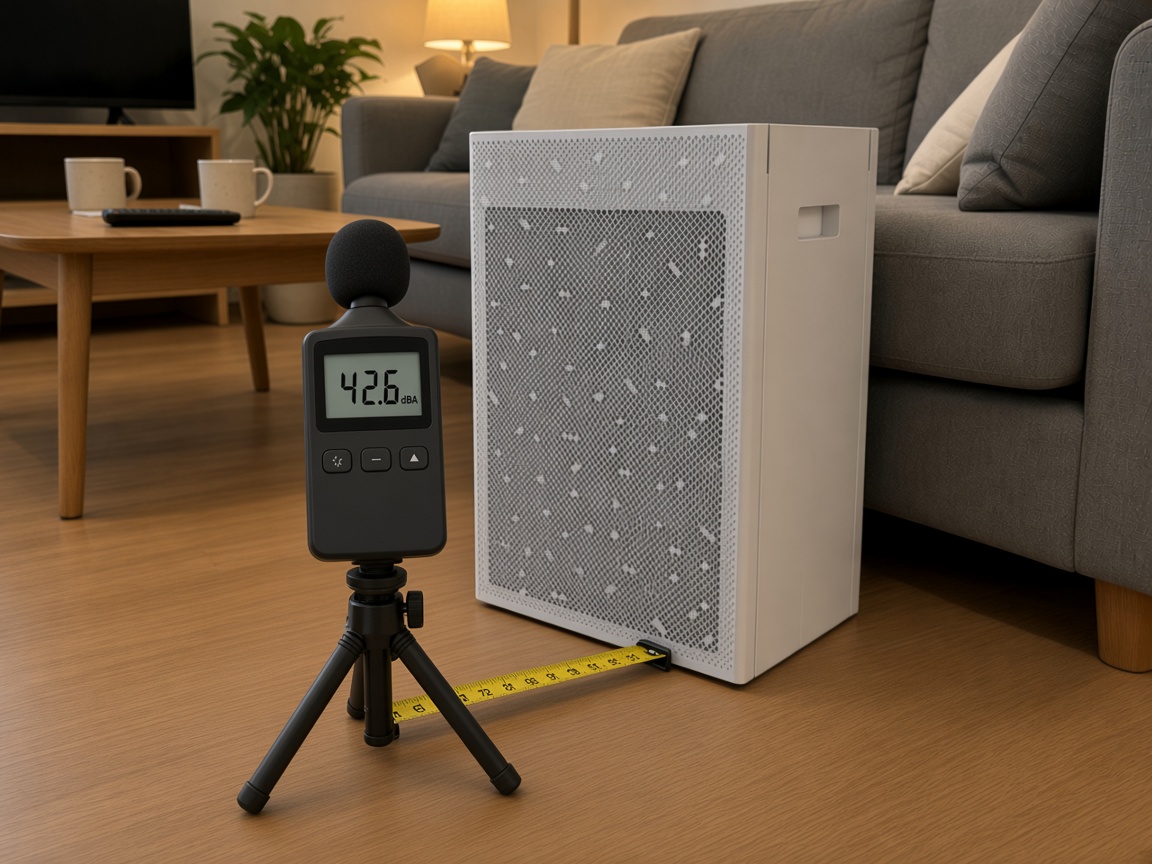
Sound level meterHandheld A-weighted meter for noise at each fan speed and for the room's ambient level.
How a test runs, step by step
Each review follows these eight steps in order. Fan on at PM2.5 ≥ 75 µg/m³; clock stops at first ≤ 15 µg/m³.
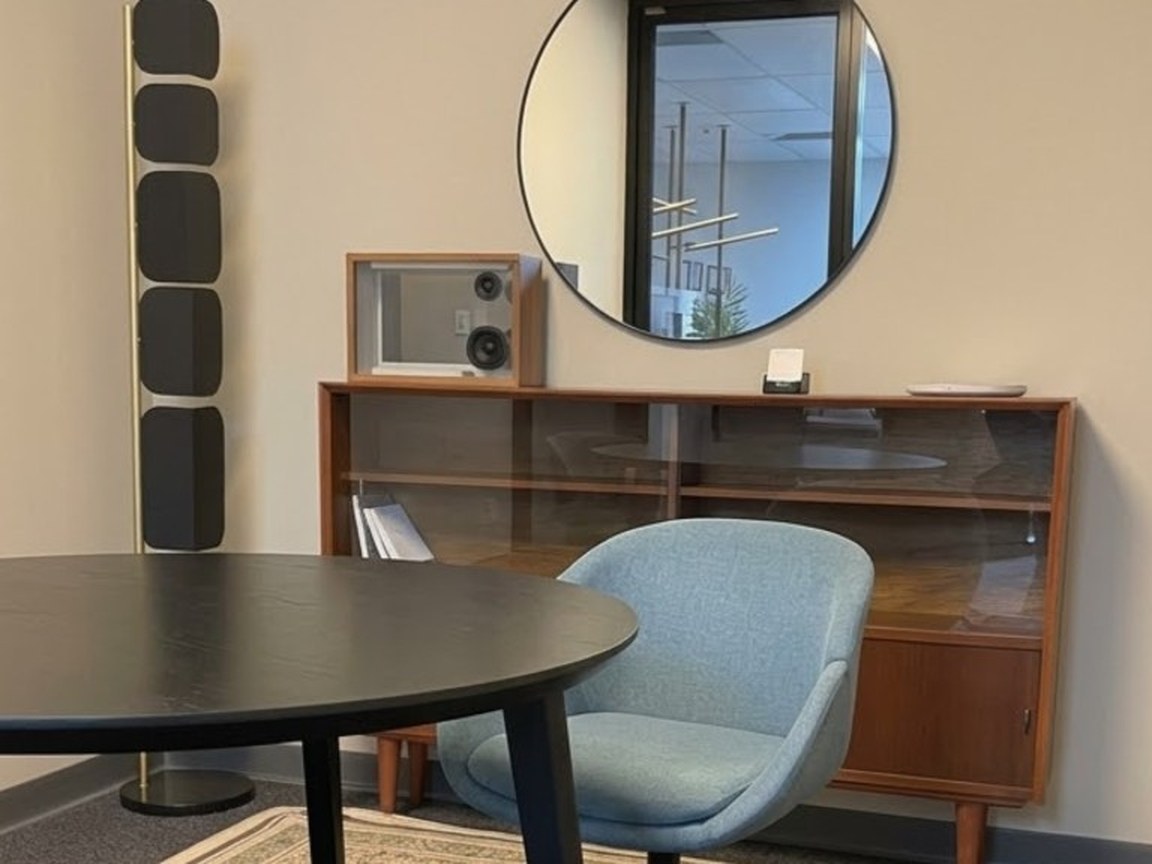
Step 1: Seal the room
All particle runs use one fixed room: 9 m² floor area, ceiling 2.5 m. The room is furnished. Doors and windows stay closed. HVAC and air-conditioning stay off for the run. This is a practical room test, not a sealed AHAM chamber.
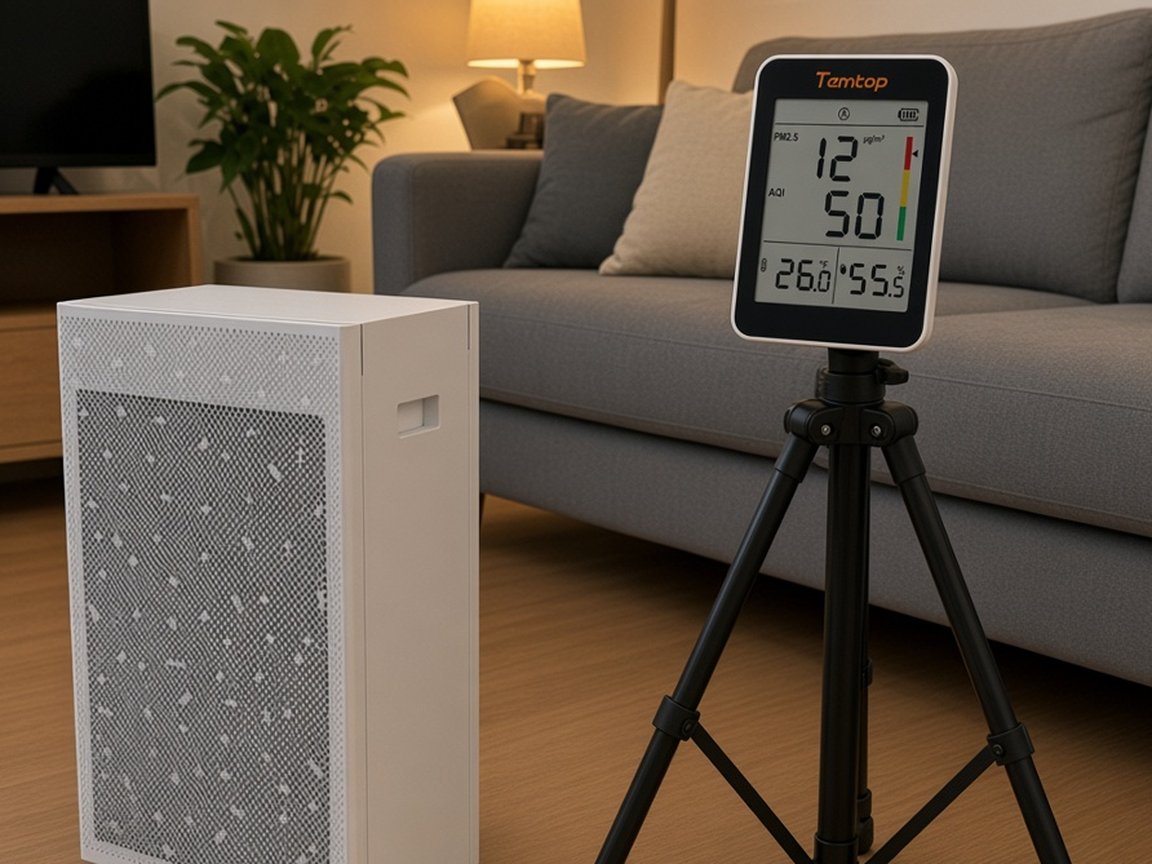
Step 2: Place the purifier and the monitor
The Temtop S1 sits 1 m horizontal from the air outlet. Product class notes (desk vs floor) may appear in the review, but the published time-to-clean always uses this room placement so units stay comparable. Personal and portable units may still be discussed as near-face products in the verdict; the chart remains the 9 m² room stress test.
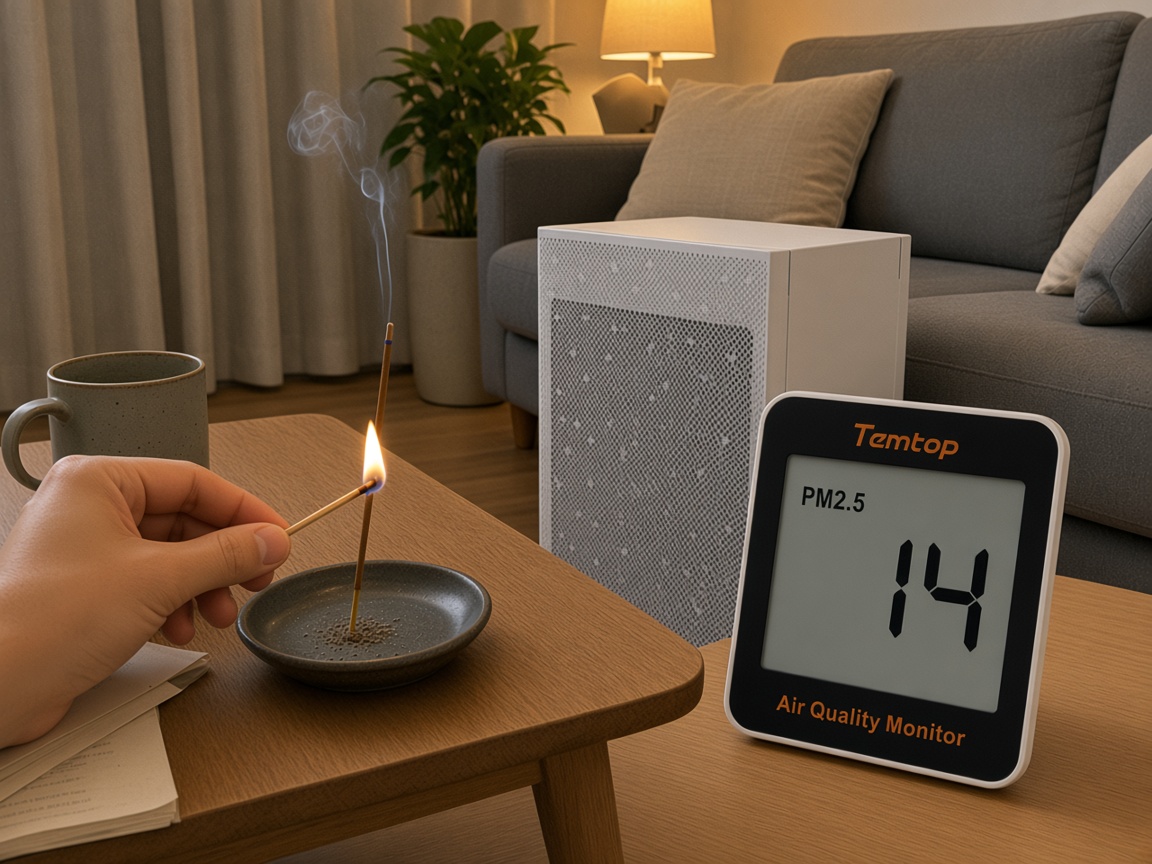
Step 3: Light incense
Light incense with the purifier off and the Temtop S1 logging. We use more than one stick to reach the start level faster. When PM2.5 reaches 75 µg/m³, we take the incense out of the room, so no new smoke is added during the timed run.
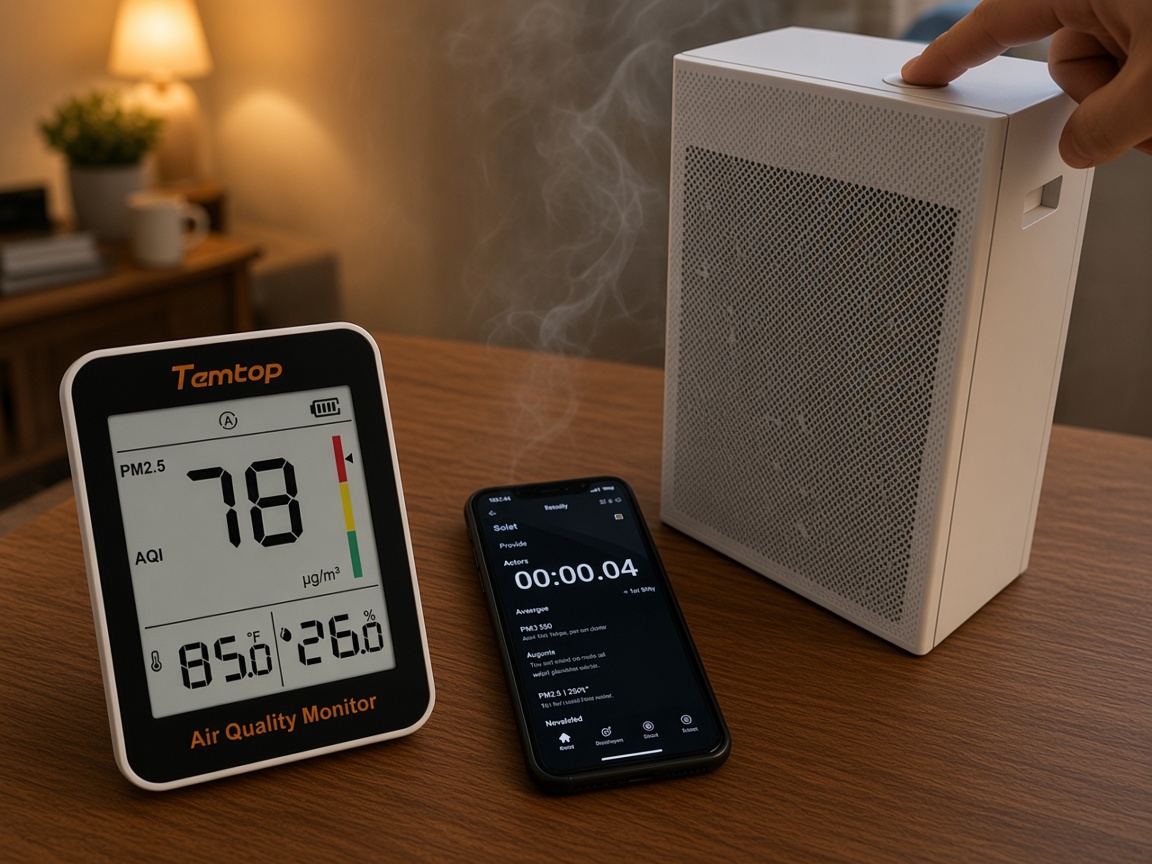
Step 4: Fan on at PM2.5 ≥ 75 µg/m³
When the Temtop S1 PM2.5 reaches ≥ 75 µg/m³, take the incense out, turn the purifier on at the speed being tested, and start the clock immediately. We run every speed this way, and fill the room with smoke again before each speed, so every run starts from the same level. High speed gives the headline time-to-clean.
Step 5: Stop the clock at PM2.5 ≤ 15 µg/m³
Stop the clock at the first reading PM2.5 ≤ 15 µg/m³. That minutes-to-clean figure is what we publish for that speed.
Step 6: Measure noise at each speed
A-weighted sound level at each fan speed, meter 1 m from the unit center, height 1.2 m. We report ambient background. If ambient is above 30 dB(A), we abort or reschedule. Older review numbers measured closer than 1 m must say so on the product page.
Step 7: Measure power at the wall
Record watts at the wall for each fan speed when the meter reading is stable enough to write down. For USB-powered units, we note the charger used. Annual electricity cost on reviews defaults to ฿4.5 per kWh unless a review states another rate.
Room size and CADR, explained
CADR (clean air delivery rate) is the number most brands print on the box. It tells you how much clean air the purifier puts out in one hour, in cubic meters. Bigger number, faster cleaning.
How big a room can it handle?
We say a purifier suits a room if it can swap all the air in that room about4 times an hour, roughly once every 15 minutes. That is a little looser than the 4.8 used for US AHAM room sizes, and stricter than the Chinese GB/T 18801 rule most brand room sizes follow. On every review we use that rule to turn the brand’s CADR into a room size, then put it next to the room size the brand claims. If our incense test comes in slower than the listed CADR predicts, we scale the room size down to match.
Example
A purifier with a CADR of 240 m³/h can swap 60 m³ of air 4 times an hour. With a 2.5 m ceiling, that is a room of about 24 m².
Does the box number hold up?
Brands measure CADR in an empty, sealed lab chamber with a fan mixing the air. Our room is furnished and lived-in, with no mixing fan, so every purifier takes longer here than the chamber math says. We do not try to turn our time back into a lab CADR. Instead we work out how long the listed CADR should take in our room, then check the real time against it.
Example
A purifier listed at 240 m³/h, starting from our75 µg/m³ start level, should reach 15 µg/m³ in our room in about45 minutes. If it takes 45 minutes or a little less, the box number holds up. If it takes much longer, we size the room down to match.
Show the math
Expected minutes = room factor × (V / CADR) × ln(Cstart / Cclean) × 60, where V is our room volume (9 m² × 2.5 m), CADR is the listed figure in m³/h, Cstart is 75 µg/m³, and Cclean is15 µg/m³. The room factor is 5: in our room, purifiers consistently take about 5 times as long as the sealed-chamber formula predicts. It is calibrated from every timed run in this room so far. So far those are all Smart Air units, so a brand-wide overstatement would not show up yet. We will recheck the factor as other brands go through the room.
How we compare with brand claims
Every review ends with a claims check: what the brand says, what we found, and what it means for you. Brands test in quiet, sealed labs and we test in a real room, so small gaps are normal. These are the bands we use before we call a claim anything other than a match.
| Claim | Matches our test | Close |
|---|---|---|
| CADR | Our time is at most 15% slower than the listing predicts | Up to 35% slower |
| Noise | Top speed within 3 dB of the listing | Within 6 dB |
| Power | Within 10% of the listing | Within 25% |
- Different standard. Many room-size claims follow the Chinese GB/T 18801 rule, about 0.07 to 0.12 m² per m³/h of CADR. Brands quote the top of that range, which works out to about 3.3 air changes an hour in a room like ours. We size rooms for about 4 air changes an hour, so our number is smaller. Neither is wrong; we show both. Claims like “cleans 60 m² in 25 minutes” usually mean the time to pass the room’s air through the purifier once, not the time to clean it, and we label them the same way.
- Couldn't verify. Health and virus claims, and very low noise figures. Our room’s background is about 20 dB(A), so readings within3 dB of it cannot be separated from the room itself.
- Falls short of claim. Kept for results outside the bands above, where the gap would change which purifier you should buy.
What we publish
| Metric | How we capture it |
|---|---|
| Time to clean | Minutes from fan-on at PM2.5 ≥ 75 µg/m³ until first ≤ 15 µg/m³ on Temtop S1, in the 9 m² room, for every fan speed |
| Noise | A-weighted dB(A) at 1 m / 1.2 m height for each fan speed; ambient logged |
| Power | Watts at the wall per speed; annual kWh on reviews uses those draws and ฿4.5/kWh unless noted |
| Listed CADR check | Top-speed time-to-clean compared with the time the listed CADR predicts in our room (room factor 5); shown on the claims check |
| Quiet-speed result | Fastest time-to-clean on a speed under 45 dB(A), compared across every unit we have tested |
| Room sizing | 4 air changes an hour from listed CADR, scaled down if our time is slower than the listing predicts, next to the manufacturer’s claimed m² |
How scores are calculated
The 10-point headline score is a weighted judgment, not a hidden formula pretending to be physics: cleaning performance in the intended use (40%), noise at usable speeds (20%), energy and filter cost of ownership (15%), design and maintenance (15%), and honesty of marketing claims (10%). A compact personal unit can outscore a louder whole-home machine if it does its actual job quietly and cheaply.
Review pages also show a category breakdown (air purification, maintenance, features, design, materials, ease of use, value, overall satisfaction). Those category scores average to the headline number.
Limitations
- We do not claim medical outcomes. Particle reduction is not a treatment for allergies or asthma.
- Incense produces particles and VOCs. We publish PM2.5 recovery, not a full VOC chamber result.
- This is not an AHAM AC-1 sealed-chamber CADR test. Listed CADR on spec tables is the manufacturer’s figure unless we state otherwise.