
How to use
Where to put an air purifier: placement rules that actually matter
By Theeraphat Chonsiri, Lab Editor8 min read
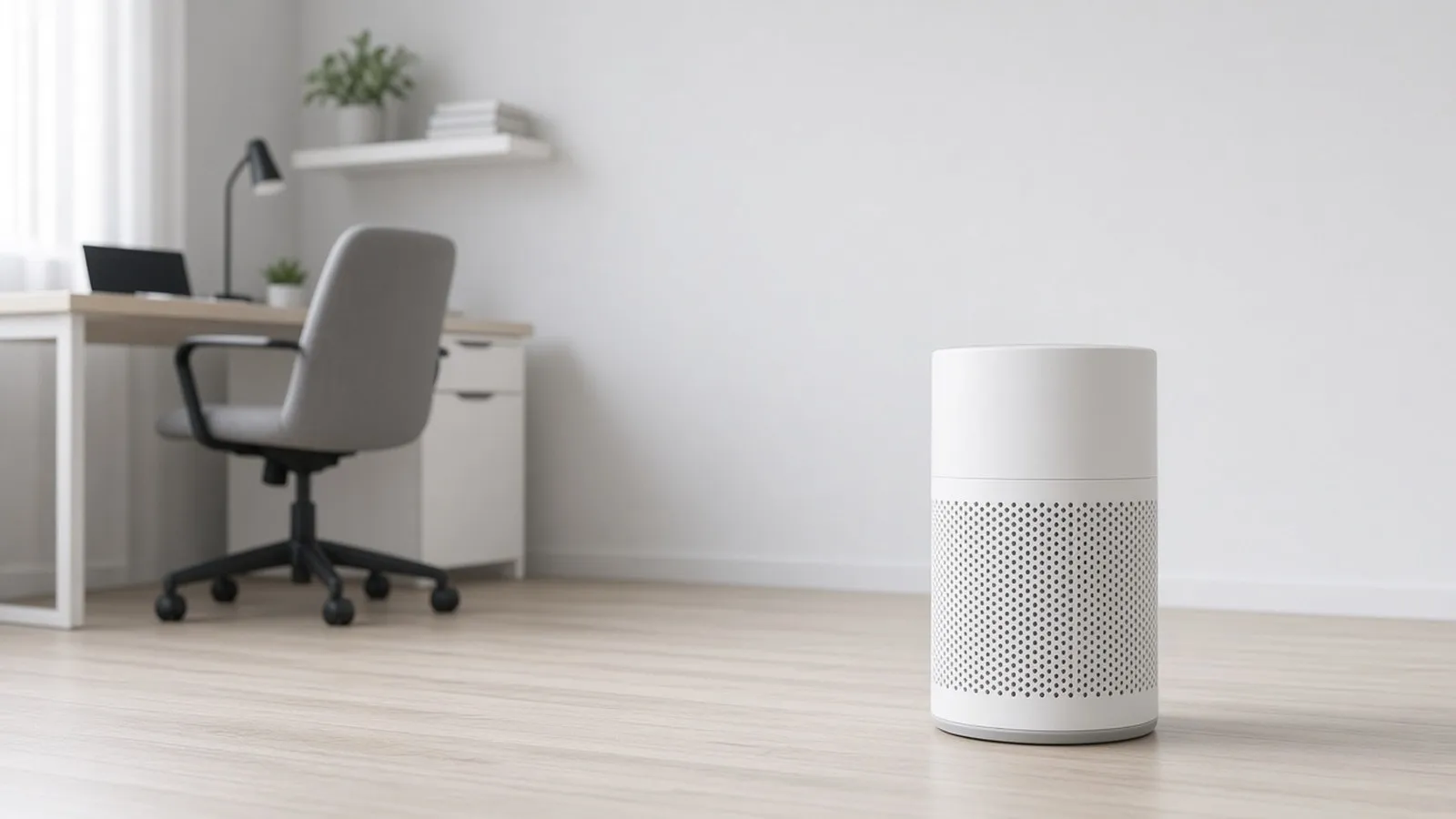
Put your air purifier in the room where you spend the most time, out in the open with some space around it, and close the door and windows. Inside that room, the exact spot matters less than most people think. A few common mistakes matter a lot more: pushing it into a corner, hiding it behind furniture, or running it with the door wide open.
This guide covers the rules that make a real difference, the best spot in each type of room, and the placement myths you can ignore.
Does placement really matter?
Less than size, more than you might hope. A purifier keeps pulling in room air, filtering it and blowing it back out. In a closed room, normal air movement from people, fans and the air conditioner mixes that clean air through the whole space. That is why a purifier with enough CADR for your room cleans the whole room, not just the area right in front of it.
Placement goes wrong when something breaks that cycle:
- The purifier pulls back its own clean air. If the intake and outlet are boxed in by walls or furniture, the purifier filters the same small pocket of air over and over. The rest of the room barely changes.
- The “room” is bigger than you think. An open door joins your bedroom to the hallway and living room. The purifier now has to clean all of that space.
- New dirty air keeps coming in. A purifier next to an open window spends its effort filtering street air.
Fix those three problems and you have done most of the work.
The five placement rules
1. Use it in the room you actually spend time in
The most effective spot is the room where you breathe the most hours. For most people that is the bedroom, because you spend 7 to 9 hours there every night. A purifier in the living room does little for you while you sleep behind a closed bedroom door.
If you only own one purifier, move it with you. Living room in the evening, bedroom at night. Compact units like the Sqair are light enough for this.
2. Leave space around the intake and outlet
Check where your purifier pulls air in and where it blows air out. Then keep those sides clear.
- Intake sides: leave at least 30 cm from walls, curtains and furniture, unless the manual says otherwise.
- Outlet: most purifiers blow air up or forward. Keep the top clear, and don’t park it under a low shelf or table.
- Corners: avoid tucking it tight into a corner. Two walls close to the intake is the classic way to make a purifier recirculate its own air.
Designs differ, so look before you place. The Sqair draws air in low around the sides and blows it straight up, so it needs space on all sides but not much overhead. The SA600 pulls air in through both the front and the back, so it should not sit flat against a wall. The Blast has its only speed dial on the back, so you will want a gap behind it anyway.
3. Close the door and windows
A closed door is the biggest free upgrade you can give a purifier. CADR is shared across all the air the purifier has to clean, so more connected space means fewer air changes per hour.
Take our 9 m² test room with a 2.5 m ceiling, or 22.5 m³. A purifier with a CADR of 110 m³/h filters that air about 4.9 times an hour, the usual sizing target. Open the door to 35 m² of hallway and living room and the space grows to about 110 m³. The same purifier now manages only about 1 air change an hour. It still helps, but a cleanup that took about 20 minutes now takes around an hour and a half.
Open windows are worse, because outdoor air keeps replacing the air you just filtered. During haze season or on high PM2.5 days, keep windows shut while the purifier runs. If you need fresh air, air out the room briefly when outdoor levels are lower, then close up and let the purifier catch up.
4. Keep it near where you breathe, if your purifier is small
With a properly sized purifier, the whole room ends up clean and the exact spot matters little. With a small or personal purifier, distance matters much more. A small unit makes a clean zone around itself rather than cleaning the whole room.
A personal unit like the QT3 has roughly 1.2 m of useful reach. On a nightstand or desk next to you, it helps. In the corner of a large room, it does almost nothing you would notice.
5. Keep it away from things that confuse it or damage it
- Humidifiers: mist and mineral dust can push the built-in sensor’s readings up and wet the filter. Keep them at least a couple of meters apart.
- Kitchens: cooking smoke is a good reason to run a purifier nearby, but not right next to the stove. Grease and steam shorten filter life. A spot just outside the kitchen works better.
- Bathrooms and damp corners: moisture is bad for HEPA and carbon filters.
- Heaters, direct hot sun, and the air conditioner’s drip line: heat and water are not good for the plastic body or the electronics.
Best spot in each room
| Room | Best spot | Avoid |
|---|---|---|
| Bedroom | On the floor 1–2 m from the bed, with clear space around it | Tight in a corner, behind curtains, or blowing on your face |
| Living room | Open floor near the sofa or seating area | Behind the sofa or tucked beside the TV cabinet |
| Open-plan living and dining | Middle of the area you use most, or two purifiers at either end | One small unit at the far end of a large space |
| Home office or desk | Floor unit near the desk, or a personal unit on the desk | Under the desk, where the intake is blocked |
| Kids’ room | Out of reach on the floor, with child lock on | Anywhere it can be pulled over or used as a step |
Bedroom
A spot on the floor beside the bed, between the nightstand and the wall, works well in most Bangkok condo bedrooms. Leave about half a meter from the wall and a meter or two from your pillow. That keeps the intake clear and puts the clean air where you breathe.
If the airflow bothers you, turn the outlet away from the bed or choose a model that blows straight up. Noise matters more than distance here. A purifier you switch off at 2 a.m. because it is too loud delivers no clean air at all. Check the measured noise at each speed in our reviews before you buy.
Living room and open-plan spaces
Large and open spaces are where size matters most. If one purifier is rated for your whole living and dining area at 4.8 air changes an hour, put it in the open near where people sit. If it is not, two smaller purifiers at opposite ends usually beat one at the far end. Large units like the Blast are built for exactly this kind of shared space.
Placement myths you can ignore
- “It has to be in the middle of the room.” Not necessary. Away from walls and furniture is enough. A purifier in the middle of the floor is a tripping hazard for very little gain.
- “Put it high up, because the dirty air rises.” Fine particles like PM2.5 stay mixed through the room’s air rather than collecting at the ceiling or floor. Floor units are designed to work on the floor. Small units can go on a table if that puts them closer to you.
- “Put it by the window to stop pollution coming in.” It will mostly filter the air leaking in around the window, not the room you are sitting in. Seal the window. Don’t make it the purifier’s job.
- “It’s fine behind the sofa, it’s still in the room.” It is in the room, but the sofa blocks much of its intake and outlet. Expect slower cleaning.
How to check your placement
The surest way to know a spot works is to measure. A separate air quality monitor on the other side of the room tells you more than the purifier’s own sensor, which only reads the air right next to it.
- Close the door and windows and note the PM2.5 reading.
- Run the purifier on the speed you will actually use.
- Check the reading again after 20 to 30 minutes.
If the far side of the room stays noticeably higher than the purifier’s own display, move the purifier into a more open spot or run a higher speed. If it still can’t keep up with the door closed, it is too small for the room.
How AirLab places purifiers in our tests
Every review uses the same setup so results stay comparable. Each purifier stands on the floor near the wall of our furnished 9 m² test room, with the door closed and the air conditioner off. The Temtop S1 monitor sits 1 m from the air outlet at 1.2 m height, roughly where a seated person breathes. Full details are on our methodology page.
That is a fair, open spot, not a best-case lab chamber. If your purifier is boxed in, or your door stays open, expect slower cleanup than our time-to-clean numbers.
The bottom line
Choose the room you spend the most time in, give the purifier clear space on its intake and outlet sides, and close the door and windows. Those three steps matter far more than finding the perfect spot. Then run it at a speed quiet enough to leave on. Our guide to running costs shows what that costs per year.
Not sure which size fits your room? Browse our air purifier reviews to compare measured time-to-clean, noise and room size for each model.